
From clay to your home: the quiet journey of handcrafted ceramics
When unboxing a ceramic piece at home, we immediately feel the cold weight of the clay body and the firm texture of its surface. But before reaching an entryway console or a living room corner, that piece spent weeks of quiet, water, earth, and fire in the workshops of our potters in Portugal.
The artisanal process takes its time. Every step requires patience and the careful touch of those who have worked the earth for generations.
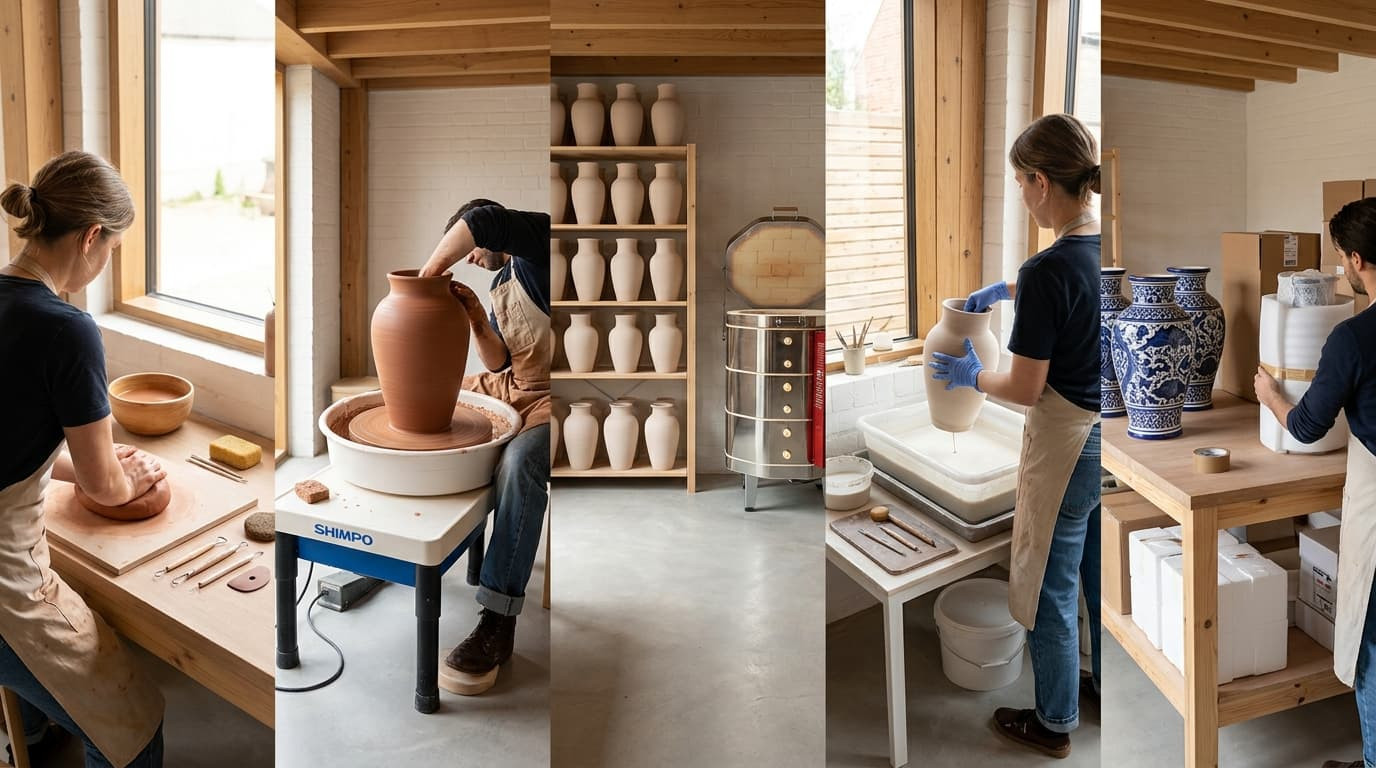
1. Choosing and kneading the clay
Everything starts with the earth. The clay is collected, cleaned of impurities, and mixed with water until reaching the right consistency. Before going onto the wheel, it must be thoroughly kneaded to drive out any air bubbles. A small air bubble left inside is enough to crack the piece in the kiln when the temperature rises.
2. The potter's wheel and shaping
In the pottery workshop, the quiet is broken only by the gentle hum of the wheel and the sound of water on the artisan's hands. The ball of clay spins on the wheel head and gains height under the steady pressure of fingers. It is a matter of millimetres. In this precise gesture, the proportions of our decorative vases take shape, gaining balance and presence.
3. Slow drying and the first firing
Once shaped, the piece cannot go straight into the fire. It needs to dry naturally for several days, away from drafts, so that the water evaporates slowly. If it dries too fast, it cracks. When it reaches what potters call the leather-hard stage, it enters the kiln for the first firing — the bisque. The raw clay transforms into ceramic, hard yet still porous.
4. Glazing and color
With the bisque-fired piece ready, the glaze is applied. Whether by dipping or manual pouring, the mineral mixture covers the clay in a matte coat. Only during the second firing, at over a thousand degrees, do these minerals fuse with the ceramic, revealing the final color, shine, or matte finish we seek. The kiln takes hours to cool before the door can be opened to see the result.
5. Inspection, packaging, and shipping
Each vase is inspected by hand. Bases, stability, and glaze finish are checked. Because we work with large, heavy pieces, such as our floor vases, packaging is as rigorous a process as the crafting itself. Pieces are protected with reinforced layers so that the journey from the pottery workshop to your door happens without a hitch.
At Decor-Vases, we value this slow pace. Knowing who shaped the earth and how much heat was needed to set it makes all the difference when the piece finally finds its place in your home.
Related posts
-
 The Legend of the Rooster of Barcelos: History and Tradition
Discover the story of the Galician pilgrim, the roasted rooster miracle, and how this Northern Portuguese symbol...Read more
The Legend of the Rooster of Barcelos: History and Tradition
Discover the story of the Galician pilgrim, the roasted rooster miracle, and how this Northern Portuguese symbol...Read more -
 The empty corner and the ceramic floor vase
When September light changes, bare corners in the house become more visible. A substantial floor vase anchors the...Read more
The empty corner and the ceramic floor vase
When September light changes, bare corners in the house become more visible. A substantial floor vase anchors the...Read more -
 Ceramics in the modern living room: breaking the coldness of straight lines
A modern living room doesn't have to feel cold. Discover how handcrafted ceramics bring weight, color, and light to...Read more
Ceramics in the modern living room: breaking the coldness of straight lines
A modern living room doesn't have to feel cold. Discover how handcrafted ceramics bring weight, color, and light to...Read more -
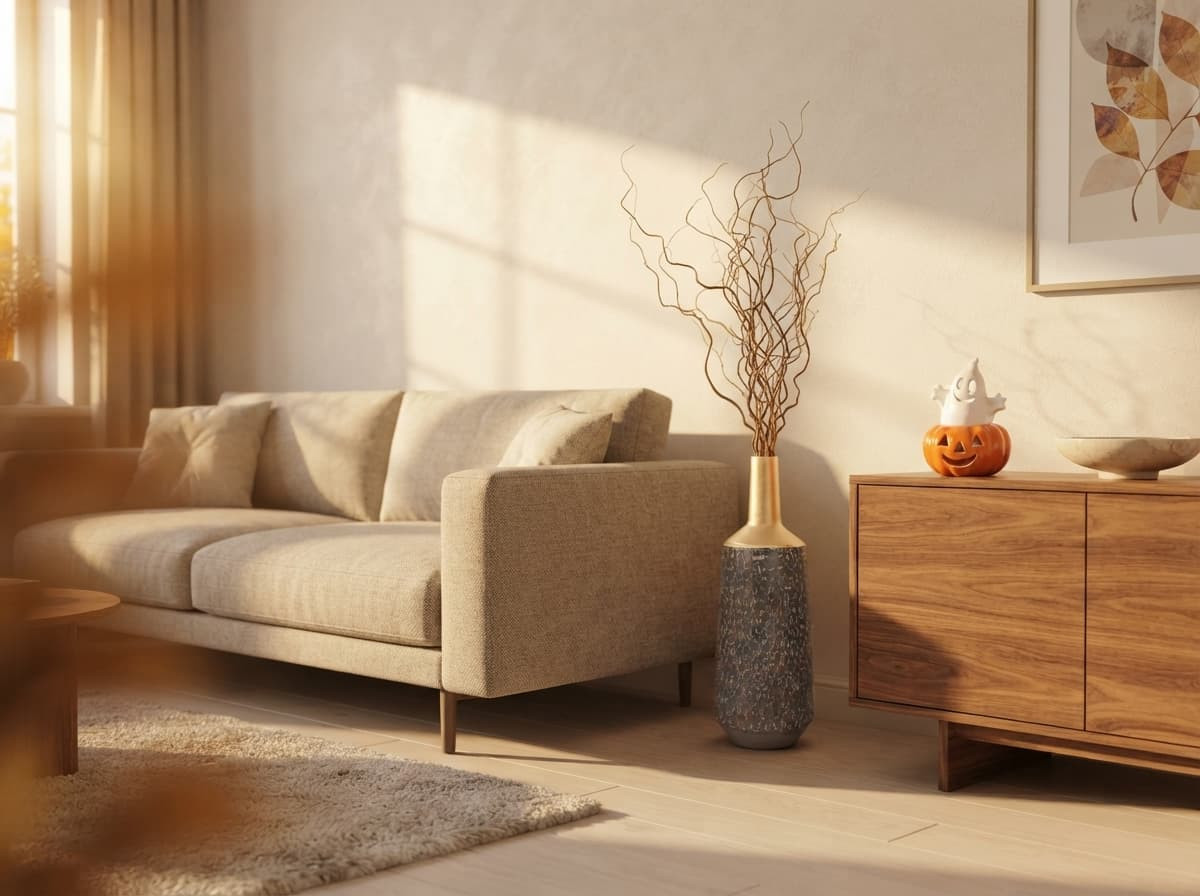 Handmade ceramics for Halloween: Pumpkins and earthy autumn tones
A mature and earthy approach to Halloween, where clay pumpkins and matte black surfaces bring autumnal warmth indoors.Read more
Handmade ceramics for Halloween: Pumpkins and earthy autumn tones
A mature and earthy approach to Halloween, where clay pumpkins and matte black surfaces bring autumnal warmth indoors.Read more
Leave a comment